
June is Men’s Health Month, which makes it a good time to talk about something many men notice but often dismiss: not feeling like themselves.
For many men, the symptoms of low testosterone are brushed off as stress, aging, or “just being busy.” Sometimes that is part of the picture. But sometimes, these symptoms are connected to low testosterone.
Men’s Health Month is about awareness, prevention, and early action. It is not about waiting until symptoms become severe. It is about paying attention to the patterns your body is showing you and getting the right evaluation when something feels off.

What Is Low Testosterone?
Testosterone is a key hormone involved in energy, libido, sexual function, muscle mass and strength, mood and motivation, bone health, and metabolic function.
Low testosterone occurs when the body does not produce enough of the hormone to support normal function. Diagnosis is not based on symptoms alone. A proper evaluation includes both symptoms and bloodwork.
Two men can have the same testosterone level and feel very different. One may have symptoms that affect daily life, while another may not. The goal is not to chase a number. The goal is to determine whether your symptoms and lab results tell a consistent story.

Low Testosterone Symptoms Men Shouldn’t Ignore
1. Persistent Fatigue
Fatigue is one of the most common symptoms men report. This is not just feeling tired after a long day. It is the kind of fatigue that does not fully improve with rest. You may wake up tired, hit an afternoon crash, or feel like your baseline energy has dropped.
Testosterone plays a role in energy metabolism, muscle function, and overall vitality. When levels are low, many men describe feeling slower, flatter, or less resilient. If fatigue has become your new normal, it deserves attention.
2. Low Libido or Sexual Performance Changes
Changes in sexual health are often one of the earliest signs men notice, but they are also among the least discussed.
Low testosterone may contribute to:
Reduced libido
Fewer spontaneous or morning erections
Difficulty maintaining erections
Lower sexual confidence
Sexual health is health. It reflects vascular, hormonal, neurological, and emotional function. If something has changed, it is worth evaluating rather than ignoring.
3. Loss of Muscle or Slower Recovery
Many men notice that workouts no longer produce the same results. You may be training consistently but losing strength, gaining fat, or feeling sore longer than you used to.
Testosterone supports muscle protein synthesis, recovery, and body composition. Low levels can make it harder to maintain lean muscle and recover from physical stress.
4. Weight Gain Around the Midsection
If you are gaining weight despite eating well and staying active, hormones may be part of the picture. Low testosterone is associated with increased body fat, reduced lean muscle, and metabolic changes.
As muscle mass declines, metabolism can shift. This can make weight management feel harder, even when effort has not changed.
5. Brain Fog, Low Focus, or Reduced Drive
Many men describe this as feeling “off.” Not depressed, necessarily. Not unable to function. Just less sharp, less motivated, or less driven than before.
Low testosterone may affect mood, motivation, cognitive performance, and overall sense of well-being. It can also overlap with poor sleep, stress, blood sugar issues, and burnout. That is why a comprehensive evaluation matters.
6. Irritability, Mood Changes, or Emotional Flatness
Low testosterone can show up emotionally. Some men become more irritable. Others feel emotionally flat, disconnected, or less engaged. This can affect relationships, work, parenting, and self-confidence.
Too often, men are told to manage stress or “tough it out.” But mood changes can have biological contributors, including hormone shifts, sleep disruption, chronic stress, and metabolic imbalance. Your emotional health is part of your physical health.
7. Poor Sleep or Waking Unrefreshed
Sleep and testosterone are closely connected. Testosterone production is influenced by sleep, especially deep sleep. Poor sleep can lower testosterone, and low testosterone can contribute to poor recovery, fatigue, and mood changes.
If you are getting enough hours of sleep but still waking unrefreshed, it may be time to evaluate sleep quality, breathing, stress physiology, and hormones.
When Should Men Get Tested for Low Testosterone?
Men should consider evaluation when symptoms are persistent, affect quality of life, or occur in clusters.
A single symptom may have many causes. But when fatigue, low libido, weight gain, poor recovery, mood changes, and brain fog appear together, it is worth checking
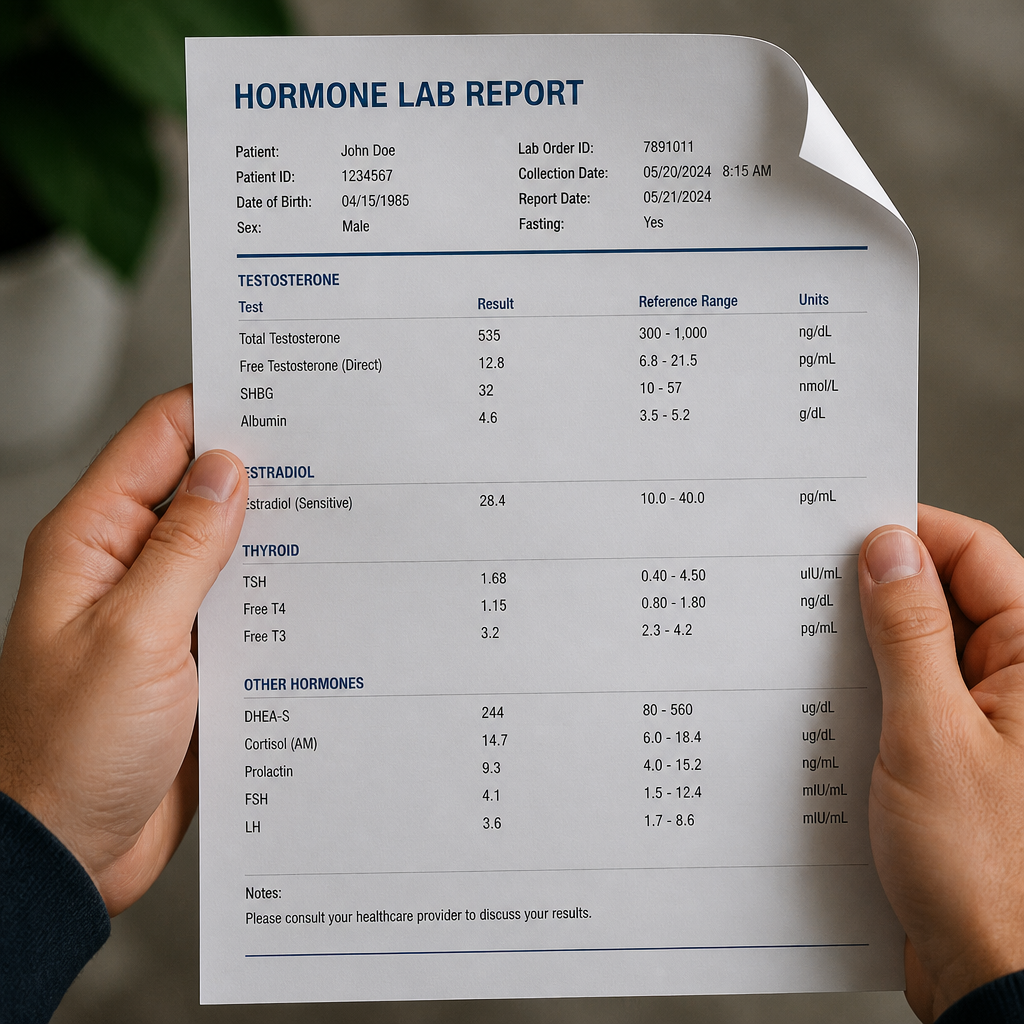
A proper low testosterone evaluation may include:
Total testosterone
Free testosterone
SHBG
LH and FSH
Estradiol when appropriate
Thyroid markers
Metabolic markers
Sleep and lifestyle review
Medication and medical history review
The Endocrine Society recommends diagnosing hypogonadism only in men who have symptoms and consistently low testosterone levels, confirmed with appropriate testing.
This matters because not every man with symptoms needs TRT, and not every man with a lower number should automatically be treated. The goal is thoughtful, individualized care.
Why Men’s Health Month Matters
Men are often less likely to seek preventive care until symptoms become disruptive. Men’s Health Month exists to change that.
It is a reminder that early detection, regular checkups, and proactive conversations can make a meaningful difference. The Men’s Health Network recognizes June as Men’s Health Month to raise awareness and encourage men and their families to prioritize health.
If you feel different from how you used to, you do not need to wait until something is “bad enough” to ask questions.
Your energy, strength, sexual health, mood, and focus matter. Your long-term health matters.
Dr. Dawson’s Take
Many men are taught to ignore symptoms, push through fatigue, and treat changes in energy, libido, mood, or performance as inevitable. But common does not mean normal, nor does it mean untreatable.
Low testosterone is only one possible piece of the puzzle. Sleep, stress, metabolism, medications, and overall health all matter. That is why the right evaluation is so important. If you are noticing persistent fatigue, low motivation, poor recovery, weight changes, or changes in sexual health, Men’s Health Month is a good time to take the next step.
The goal is not to chase testosterone levels. The goal is to understand what your body is telling you and build a plan that supports strength, clarity, recovery, and long-term health.
Book a consultation to get a science-based look at your hormones, sleep, and metabolic health.